Transforming Historical Complexity Into Accessible Digital Experience
Project Overview
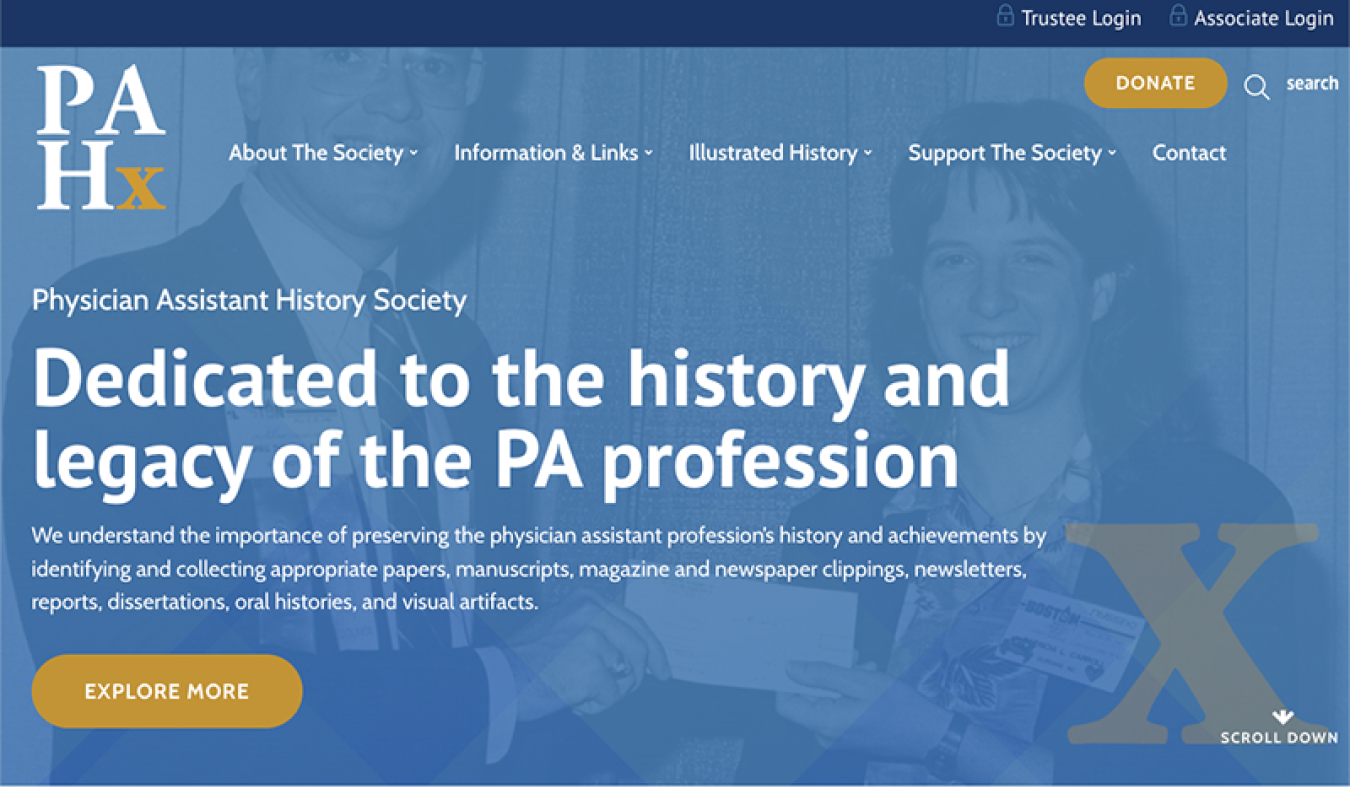
The Physician Assistant History Society (PAHx) serves as the authoritative repository for the history of the physician assistant profession—preserving decades of photographs, video interviews, oral histories, timelines, museum artifacts, and scholarly research. This isn’t a simple brochure site; it’s a living digital archive that must serve researchers, PA students, practicing professionals, and the general public while maintaining the integrity of historical materials spanning over 50 years.
PAHx faced a challenge familiar to organizations stewarding large historical collections: how do you make extensive archival content accessible and discoverable without overwhelming visitors or sacrificing the depth that makes the collection valuable? Their existing WordPress site suffered from navigation complexity, inconsistent organization across hundreds of pages, and accessibility barriers that prevented portions of their diverse audience from engaging with crucial historical resources.
Code Conspirators partnered with PAHx to reimagine their digital presence—tightening content architecture while preserving the richness of their historical archive, and implementing comprehensive WCAG accessibility standards that ensure this critical piece of healthcare history remains available to everyone.
The Strategic Challenge
Content Volume & Organization:
- Hundreds of pages spanning multiple collection types (photographs, videos, oral histories, timelines, museum exhibits)
- Historical materials requiring careful categorization and metadata
- Complex information architecture making navigation confusing
- Content depth intimidating casual visitors while frustrating serious researchers
- No clear pathways guiding different user types to relevant materials
Diverse Audience Needs:
- PA students researching professional history for academic purposes
- Practicing PAs exploring the profession’s development
- Healthcare historians conducting scholarly research
- General public seeking information about the PA profession
- International audiences as PA profession expands globally
- Each group needing different entry points and navigation patterns
Accessibility Imperatives:
- Legal and ethical obligation to serve users with disabilities
- Healthcare profession’s commitment to inclusive access
- Complex multimedia content (video, audio, images) requiring thoughtful accommodation
- Historical materials sometimes lacking alternative text or captions
- Need for screen reader compatibility across extensive archive
- WCAG compliance across all collection types and content formats
Technical & Maintenance Constraints:
- WordPress platform requiring optimization for large content volume
- Internal team needing to manage and update extensive collections
- Search functionality struggling with archive complexity
- Mobile responsiveness issues with media-heavy pages
- Performance challenges from extensive image and video libraries
- Limited technical resources for ongoing content management
Strategic Positioning:
- Establishing PAHx as authoritative voice in PA history
- Supporting academic research with professional-grade digital archive
- Building engagement with PA community
- Attracting donations of additional historical materials
- Maintaining credibility with healthcare and academic institutions
Code Conspirators’ Strategic Solution
Intelligent Information Architecture:
Rather than simply reorganizing existing pages, Code Conspirators engineered a strategic content hierarchy that serves multiple user journeys simultaneously:
Collection-Based Navigation:
We structured the site around distinct collection types—Illustrated Timeline, Museum Collections, Photograph Collections, Video Collections, and Oral History Collections—each with tailored navigation and display optimized for its specific content format.
This approach allowed casual visitors to explore collections intuitively while providing researchers with direct access to specialized materials. The homepage prominently features visual entry points to each collection, reducing decision paralysis while clearly communicating the archive’s breadth.
Progressive Disclosure:
Understanding that the collection’s depth could overwhelm, we implemented progressive disclosure patterns that reveal information layers gradually. Landing pages provide high-level overviews with visual previews, allowing users to gauge interest before diving deeper. Detailed metadata, scholarly descriptions, and contextual information appear only when users indicate interest through interaction.
This design philosophy maintained content richness while preventing information overload—a critical balance for educational resources serving diverse expertise levels.
Intuitive Wayfinding:
We developed clear visual hierarchies, breadcrumb navigation, and contextual linking that keeps users oriented within the extensive archive. Users always know where they are, how they got there, and where they can go next—essential for sites where exploration might span dozens of pages.
Related content suggestions and “Explore More” sections encourage continued engagement while providing relevant pathways aligned with user interest patterns.
Comprehensive WCAG Accessibility Implementation:
Code Conspirators didn’t treat accessibility as a checklist—we architected the entire platform around inclusive design principles ensuring that PAHx’s historical resources remain accessible to the profession’s entire community.
Semantic HTML Structure:
We implemented proper heading hierarchies, landmark regions, and semantic markup that screen readers interpret accurately. This foundational work ensures assistive technology users can navigate efficiently, jump to relevant sections, and understand content relationships.
Multimedia Accessibility:
Given PAHx’s extensive video and audio collections, multimedia accessibility became a priority focus:
- Video captions and transcripts for oral history interviews and historical footage
- Audio descriptions for visually significant content
- Transcript availability for all audio materials
- Alternative text for historical photographs describing visual content meaningfully
- Accessible video players with keyboard-navigable controls
This comprehensive approach transformed multimedia collections from potential accessibility barriers into fully inclusive resources.
Color Contrast & Visual Design:
We ensured all text meets WCAG AA contrast requirements (and AAA where possible), making content readable for users with visual impairments or color blindness. Typography choices prioritize legibility, with scalable fonts maintaining readability at different zoom levels.
Keyboard Navigation:
Every interactive element—menus, collection filters, media players—functions fully via keyboard, supporting users who cannot use mouse navigation. Focus indicators clearly show keyboard position, and tab order follows logical content flow.
Form Accessibility:
Contact forms, search interfaces, and submission tools include proper labeling, error messaging, and accessible validation—critical for users contributing to oral history collections or requesting research assistance.
Screen Reader Optimization:
We implemented ARIA labels, skip navigation links, and logical reading order ensuring screen reader users can efficiently access content without navigating through repetitive elements. Complex interface components include appropriate ARIA attributes making their purpose and state clear to assistive technology.
Ongoing Accessibility Monitoring:
Beyond initial implementation, we established processes for maintaining accessibility as new content is added—providing PAHx staff with tools and training to ensure future materials meet established standards.
WordPress Optimization for Archive Management:
Understanding that PAHx staff would manage this extensive collection long-term, we optimized WordPress for archive-specific workflows:
Custom Content Types:
We developed specialized post types for different collection materials (photographs, videos, oral histories, artifacts), each with appropriate metadata fields. This structure maintains consistency while simplifying content entry for specific material types.
Media Library Organization:
With thousands of historical images and videos, we implemented tagging systems, category structures, and search functionality helping staff locate and manage media assets efficiently.
Batch Import Capabilities:
For large collection additions, we created tools supporting batch uploads with metadata, reducing the administrative burden of adding extensive historical donations.
Intuitive Admin Interface:
The WordPress backend received custom configurations making collection management straightforward for non-technical staff. Clear workflows, helpful documentation, and logical organization reduce training time and prevent errors.
Performance Optimization:
Despite media-heavy content, we implemented caching strategies, image optimization, and lazy loading maintaining fast page loads. Users can explore extensive collections without performance degradation.
Search & Discovery Enhancement:
For an archive of this scale, search functionality became critical:
Advanced Search Capabilities:
We implemented filtered search allowing users to narrow results by collection type, date range, subject matter, and content format. Researchers can quickly locate specific materials within the extensive archive.
Relevant Results:
Search algorithms prioritize relevance, considering content type, metadata, and user context. Rather than overwhelming users with hundreds of results, the system surfaces most relevant materials first.
Visual Search Results:
Search results include thumbnails and content previews helping users quickly assess relevance before clicking through—essential for visual collections like photographs and museum artifacts.
Mobile-Responsive Historical Archive:
Historical archives traditionally assumed desktop research environments, but modern users increasingly access content via mobile devices:
Responsive Collection Display:
We designed collection interfaces that adapt elegantly to smaller screens. Image galleries, video players, and timeline interfaces remain fully functional and intuitive on smartphones and tablets.
Touch-Optimized Navigation:
Mobile navigation prioritizes touch-friendly targets, simplified menus, and gesture-based interactions appropriate for smartphone usage.
Performance on Mobile Networks:
Understanding that mobile users may have limited bandwidth, we implemented progressive loading and image optimization ensuring the archive remains accessible even on slower connections.
Technical Excellence Highlights
WordPress Platform Optimization:
- Custom post types for specialized collection materials
- Advanced custom fields for metadata management
- Optimized database queries handling large content volume
- Caching strategies maintaining performance at scale
- Secure media file handling for historical materials
WCAG 2.1 AA Compliance:
- Semantic HTML5 structure throughout
- Comprehensive ARIA implementation for complex interactions
- Color contrast meeting accessibility standards
- Keyboard navigation for all interface elements
- Screen reader optimization across all content types
- Multimedia captions and transcripts
Performance Architecture:
- Image optimization and lazy loading for media-heavy pages
- CDN integration for faster content delivery
- Efficient caching reducing server load
- Mobile-optimized responsive design
- Fast loading despite extensive archival content
Content Management System:
- Intuitive admin interface for non-technical staff
- Batch import tools for large collection additions
- Media library organization and tagging
- Workflow automation for content approval
- Training and documentation for ongoing management
Search & Discovery:
- Advanced filtering by collection, date, subject, format
- Relevance-based result ranking
- Visual search results with thumbnails
- Contextual suggestions and related content
- Mobile-optimized search interface
Measurable Business Impact
Enhanced User Experience:
- Intuitive navigation reducing visitor confusion and bounce rates
- Clear pathways guiding different user types to relevant content
- Progressive disclosure preventing information overwhelm
- Mobile-friendly access expanding audience reach
- Faster page loads maintaining engagement with media-rich content
Accessibility Achievement:
- Full WCAG 2.1 AA compliance across all collection types
- Multimedia content accessible to users with disabilities
- Keyboard navigation supporting diverse interaction methods
- Screen reader optimization enabling full archive access
- Inclusive design expanding potential audience significantly
Operational Efficiency:
- Streamlined content management for extensive collections
- Batch import tools accelerating new material additions
- Intuitive admin interface reducing staff training requirements
- Organized media library simplifying asset management
- Sustainable platform supporting long-term archive growth
Strategic Positioning:
- Professional digital presence establishing authority in PA history
- Academic-grade archive supporting scholarly research
- Improved discoverability attracting researchers and students
- Platform credibility encouraging historical material donations
- Foundation for international audience growth
Community Engagement:
- Clearer entry points increasing casual visitor exploration
- Oral history submission tools encouraging community contribution
- Newsletter integration building engaged audience
- Social sharing capabilities expanding archive awareness
- Educational resources supporting PA profession development
Strategic Partnership Value
Archive-Specific Expertise:
Code Conspirators brought specialized understanding of digital archive requirements—recognizing that historical collections demand different approaches than typical corporate websites. We balanced preservation of historical integrity with modern user experience expectations, ensuring the archive serves both scholarly rigor and public accessibility.
Accessibility Leadership:
Rather than treating WCAG compliance as a legal obligation, we embraced accessibility as a core value aligned with PAHx’s mission. Healthcare history should be accessible to everyone—including the significant percentage of healthcare professionals and students with disabilities. Our comprehensive implementation ensures this critical resource remains inclusive.
Content Architecture Mastery:
Organizing hundreds of pages spanning multiple collection types required sophisticated information architecture thinking. We didn’t just reorganize existing content—we created logical systems that support both current materials and future collection growth, ensuring the platform scales elegantly as PAHx’s archive expands.
WordPress Excellence:
While WordPress powers millions of websites, optimizing it for large-scale historical archives requires specialized expertise. We engineered custom solutions addressing PAHx’s unique content management challenges while maintaining platform stability and security.
Long-Term Sustainability:
We designed systems that PAHx staff can maintain and expand independently. Through training, documentation, and intuitive interfaces, we empowered the organization to steward their digital archive without ongoing technical dependencies—critical for nonprofit sustainability.
Mission Alignment:
Code Conspirators didn’t just deliver technical services—we became partners in PAHx’s mission to preserve and share PA profession history. Our team’s respect for the historical significance of these materials informed every design decision, ensuring the platform honors the stories it preserves.
Long-Term Platform Success
The PAHx website transformation established a sustainable foundation for continued archive growth:
Scalable Architecture:
- Content management systems supporting unlimited collection expansion
- Performance architecture maintaining speed as archive grows
- Flexible design accommodating new collection types
- Metadata structures supporting evolving organizational needs
Community Contribution:
- Tools enabling ongoing oral history submissions
- Processes for vetting and incorporating community-contributed materials
- Forms supporting historical material donations
- Engagement features building active community around PA history
Educational Impact:
- Resources supporting PA student education
- Scholarly research tools advancing academic understanding
- Public education materials building profession awareness
- International accessibility supporting global PA profession growth
Future Enhancement Ready:
- Platform architecture supporting advanced features like virtual exhibitions
- Foundation for potential interactive timeline expansions
- Infrastructure ready for multimedia enhancement
- Flexible design accommodating evolving accessibility standards
Conclusion
The PAHx project demonstrates Code Conspirators’ ability to serve mission-driven organizations with complex content requirements and diverse audience needs. By simultaneously addressing information architecture challenges, implementing comprehensive accessibility standards, and optimizing content management workflows, we transformed an overwhelming digital archive into an intuitive, inclusive resource that honors the physician assistant profession’s history while making it accessible to future generations.
This wasn’t just website reorganization—it was strategic digital stewardship that preserved historical integrity while embracing modern accessibility expectations. The result is a platform that serves researchers, students, professionals, and the public equally well, ensuring that the story of the PA profession remains discoverable, understandable, and accessible to everyone with interest in this crucial piece of healthcare history.
PAHx now has a digital home worthy of the profession it documents—streamlined without sacrificing depth, accessible without compromising richness, and sustainable without requiring ongoing technical dependencies. The archive doesn’t just preserve history; it invites exploration, encourages contribution, and ensures that the PA profession’s story continues to inspire future healthcare leaders.
Key Takeaway: When you steward extensive historical collections serving diverse audiences, generic website approaches fail. Code Conspirators delivers specialized expertise in archive management, accessibility implementation, and content architecture that transforms overwhelming complexity into intuitive discovery—ensuring your organization’s historical mission thrives in the digital age.